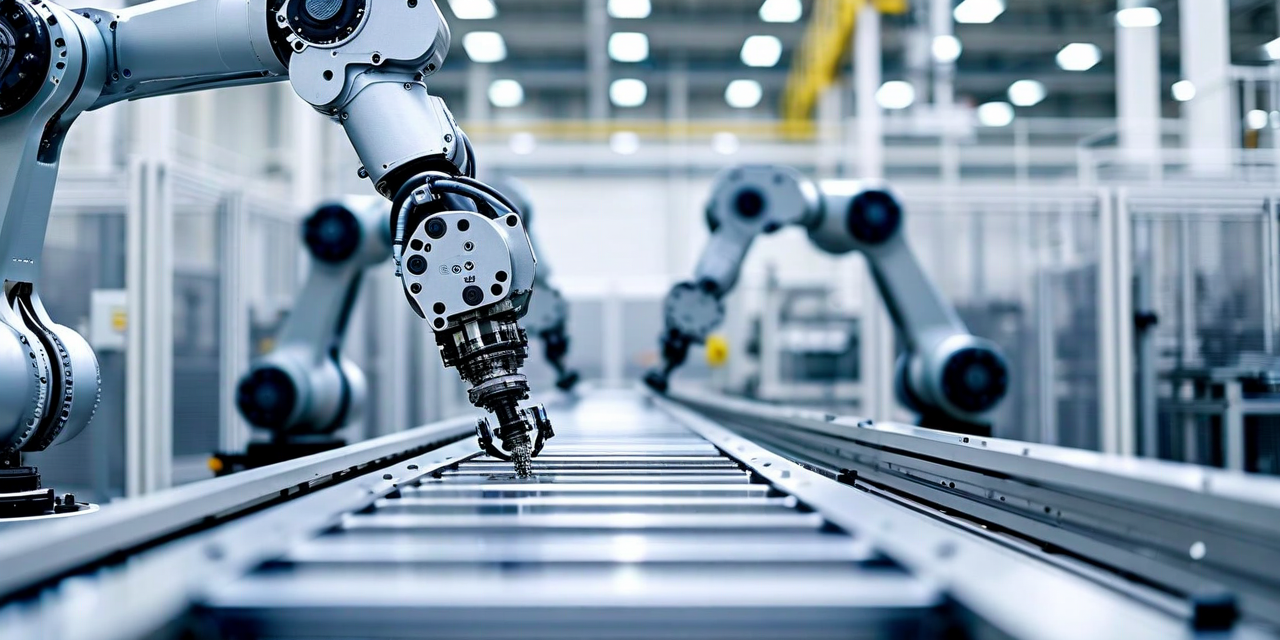
European robotics is experiencing a renaissance. After decades in which the continent's world-class expertise in precision manufacturing, industrial automation, and control systems was deployed primarily in large established companies rather than high-growth startups, a new generation of robotics companies is emerging from European universities and corporate spinouts. Labour shortages, supply chain disruptions, and dramatic advances in machine learning are converging to create the best environment for robotics entrepreneurship in Europe's history. Here is where we are placing our bets.
The Macro Conditions Driving Robotics Demand
The demand side of the robotics equation has rarely been stronger. Across Europe, manufacturing industries are confronting a structural labour shortage that has been building for a decade and that the pandemic accelerated dramatically. Germany's engineering and manufacturing sector reports vacancy rates that would have been unimaginable a decade ago. The warehousing and logistics industry, facing explosive growth in e-commerce while simultaneously grappling with driver shortages and warehouse worker attrition, is investing at unprecedented scale in automation. Healthcare is experiencing acute nursing and care worker shortages across every European country. Agriculture faces seasonal labour constraints that are becoming year-round structural problems as Eastern European guest workers find better-paying opportunities closer to home.
These labour dynamics are creating pull demand for robotics that is qualitatively different from the previous generation of automation investment, which was primarily driven by efficiency improvements rather than necessity. When a manufacturer cannot find human workers to fill positions at any economically viable wage, the investment thesis for automation changes from "this pays back in three years" to "this is a prerequisite for continued operation." This shift in buyer psychology is driving faster purchasing decisions, larger deployments, and greater tolerance for technical risk than the robotics industry has historically experienced.
The supply chain disruptions of 2020–2022 added another dimension to this demand picture. European manufacturers who had built lean, just-in-time supply chains optimised for cost discovered that geographic concentration of supply and reliance on extended logistics networks introduced fragility that was commercially unacceptable. The response — reshoring critical manufacturing, building more resilient supply chains, and investing in flexible production capacity — is creating a wave of capital expenditure in European manufacturing that is disproportionately flowing into automation and robotics.
How Machine Learning Is Changing What Robots Can Do
The previous generation of industrial robotics — the articulated arms that populate automotive assembly lines — are extraordinarily capable at executing precisely programmed, repetitive tasks in highly controlled environments. What they cannot do is adapt to variability. A conventional industrial robot can assemble a specific part hundreds of thousands of times with submillimetre precision, but if the part is slightly misaligned, an unfamiliar variant arrives, or the environment changes in an unexpected way, it fails. Programming these robots for flexibility is extraordinarily expensive — often more expensive than the robot hardware itself — and the resulting programmed flexibility is still brittle compared to human adaptability.
Machine learning is changing this fundamental limitation. Reinforcement learning techniques allow robots to acquire manipulation skills through simulated practice rather than explicit programming, dramatically reducing the time and cost required to deploy robots in new tasks. Foundation models trained on internet-scale data are giving robots the ability to understand natural language instructions and generalise to novel situations in ways that rule-based systems never could. Computer vision systems based on deep learning are enabling robots to perceive and interact with unstructured environments — cluttered warehouses, outdoor agricultural fields, hospital wards — that conventional automation could not address.
The result is a new category of robots that are fundamentally more useful than their predecessors: collaborative robots (cobots) that can work safely alongside humans without physical separation barriers; mobile manipulation platforms that can navigate complex indoor environments and perform grasping and manipulation tasks; agricultural robots that can identify and harvest specific crops in variable field conditions; and medical robots that can assist with patient handling, medication dispensing, and rehabilitation without the strict controlled-environment requirements of surgical robots.
Europe's Structural Advantages in Robotics
Europe's position in robotics is not just a matter of historical legacy — it reflects genuine structural advantages that are highly relevant to the next generation of robotics companies. The first advantage is proximity to customers. Europe's manufacturing sector — including automotive, aerospace, pharmaceutical, food processing, and specialty chemicals — represents the world's largest concentration of sophisticated automation buyers outside of Japan. European robotics companies building for industrial customers have the enormous advantage of being able to develop and iterate their products in close collaboration with nearby enterprise customers, accelerating the product development cycle and reducing the commercial risk associated with new deployments.
The second advantage is engineering talent. Germany, Switzerland, the Netherlands, Sweden, and the UK collectively house some of the world's strongest mechanical engineering, control systems, and embedded software talent pools. Companies like KUKA in Germany, ABB in Switzerland, and Fanuc's European operations have trained generations of robotics engineers who are now available to early-stage companies. The spinout culture that has developed around these industrial anchors — combined with the growth of academic robotics research at TU Munich, ETH Zurich, Imperial College London, and EPFL — is producing a pipeline of robotics entrepreneurs and engineers that is arguably superior to any other geography outside of the US robotics clusters.
The third advantage is regulatory credibility. European-built machines and safety systems are globally trusted. CE marking, the European safety certification framework for machinery, is accepted as a quality signal in markets around the world. A European robotics company entering the North American, Japanese, or Asian market with CE-certified equipment starts from a position of credibility that its competitors from less rigorous regulatory environments cannot match.
The Applications We Are Most Excited About
Within robotics, we have developed specific views about the application areas most likely to generate compelling venture returns from seed-stage investment over the next five to ten years. Agricultural robotics is at the top of our list. European agriculture faces an acute and growing labour shortage, particularly for harvesting tasks that require delicate manipulation — soft fruits, vegetables, specialist crops. The addressable market is enormous, the willingness to pay is high and growing, and the technical challenges — outdoor navigation, crop recognition, gentle grasping — are exactly the kind of hard problems where a combination of machine learning and precision hardware engineering creates durable competitive advantage.
Logistics and warehouse automation is our second priority area. The growth of e-commerce has created explosive demand for automated picking, packing, and sorting systems that can handle the enormous variety of SKUs in a modern fulfilment centre. Several European companies are building compelling solutions in this space, combining mobile robotics with machine learning-based manipulation to achieve the kind of flexible automation that was previously impossible. The market is large, the customer base is motivated, and the competitive dynamics favour companies with genuine manipulation technology over pure software plays.
Healthcare and assistive robotics is our third focus area. Europe's aging population is creating structural demand for robots that can assist with patient handling, medication dispensing, care home activities, and rehabilitation. The regulatory pathway for healthcare robotics is complex, but European regulatory expertise — combined with the proximity to healthcare systems that are actively seeking cost-effective solutions — makes this an attractive market for well-capitalised European startups.
What We Look For in Robotics Investments
Our criteria for robotics investments reflect the specific challenges of building robotics companies, which are more hardware-intensive and have longer product development cycles than software companies. We look for founding teams with a combination of deep hardware and software expertise — robotics is not a domain where pure software founders or pure hardware engineers can succeed without the other half of the equation. We look for validated demand, typically in the form of letters of intent or early paid pilots, that de-risk the commercial thesis. And we look for a clear path from seed funding to a commercially deployable product, with identified technical milestones that can be achieved with the proposed financing.
We do not insist on proven revenue at the seed stage for robotics companies, given the longer development cycles inherent in the domain. But we do insist on a clear-eyed assessment of the time and capital required to reach commercialisation, with financial modelling that demonstrates the business remains fundable at each stage of its development. Robotics companies that run out of capital between their first prototype and their first commercial deployment — without having achieved the milestones needed to raise the next round — are a failure mode we work hard to avoid.
If you are building a robotics company in Europe, particularly in agriculture, logistics, or healthcare, we are actively looking for seed investments in this space. Reach out to our team and let us know what you are working on.
Key Takeaways
- Structural labour shortages and supply chain reshoring are creating necessity-driven demand for robotics that is qualitatively stronger than efficiency-driven automation spending.
- Machine learning — particularly reinforcement learning and foundation models — is enabling a new generation of robots capable of handling variability and unstructured environments.
- Europe's proximity to manufacturing customers, deep engineering talent pools, and regulatory credibility are structural competitive advantages for robotics companies.
- Agricultural robotics, logistics automation, and healthcare robotics are the three application areas where we see the strongest near-term investment opportunities.
- Successful robotics investments require founding teams with combined hardware and software depth, validated commercial demand, and realistic development timelines.
- European robotics companies have a strong foundation in industrial automation heritage and academic research excellence at TU Munich, ETH Zurich, Imperial, and EPFL.